
When it comes to wood projects, the terms stain and finish are often used interchangeably. While they are commonly applied together, they actually serve two very different purposes.
Understanding the difference between stain and finish can make a significant impact on how your wood surfaces look — and how well they hold up over time.
Whether you’re working with deck boards, cabinetry, trim, or built-ins, choosing the right combination helps protect your investment and preserve the character of the wood.
What Is a Wood Stain?
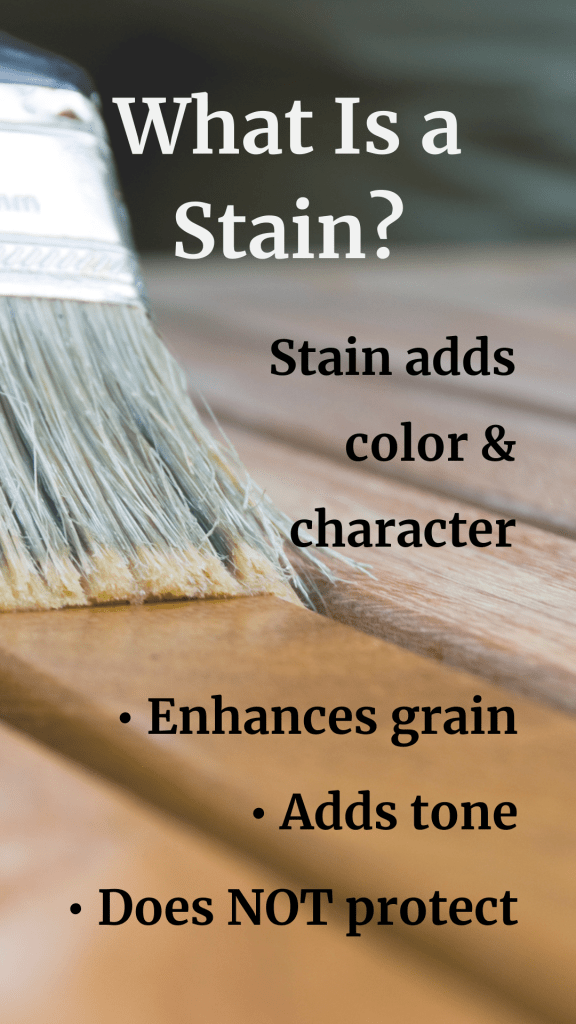
A wood stain is designed to enhance the natural appearance of wood by adding color while allowing the grain to remain visible.
Unlike paint, stain penetrates into the wood fibers, highlighting the natural texture and depth of the material.
Homeowners often use stain to:
- Match existing wood tones
- Deepen the natural color of wood
- Create a specific design aesthetic
- Highlight wood grain and character
Stains come in several varieties including oil-based stains, water-based stains, and gel stains, each offering different levels of penetration, drying time, and color richness.
However, while stain improves the appearance of wood, it does not provide long-term protection on its own.
What Is a Wood Finish?
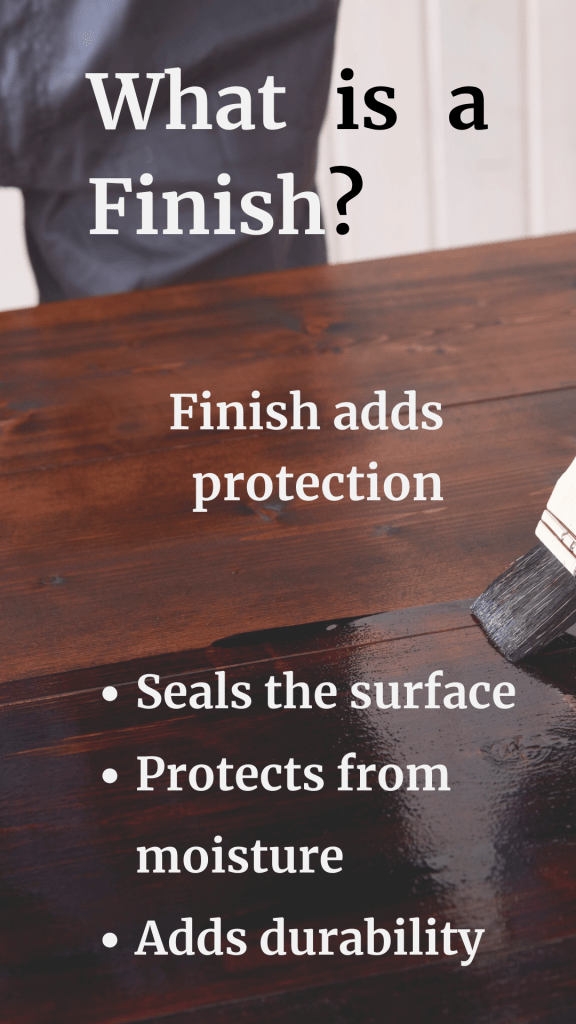
A wood finish is applied after staining (or directly to natural wood) to protect the surface.
Unlike stain, a finish sits on top of the wood, forming a protective layer that shields the material from moisture, sunlight, and everyday wear.
Common wood finishes include:
- Polyurethane
- Varnish
- Lacquer
- Hardwax oils
- Exterior sealants
The right finish helps protect wood from:
- Water damage
- UV exposure
- Scratches and wear
- Seasonal expansion and contraction
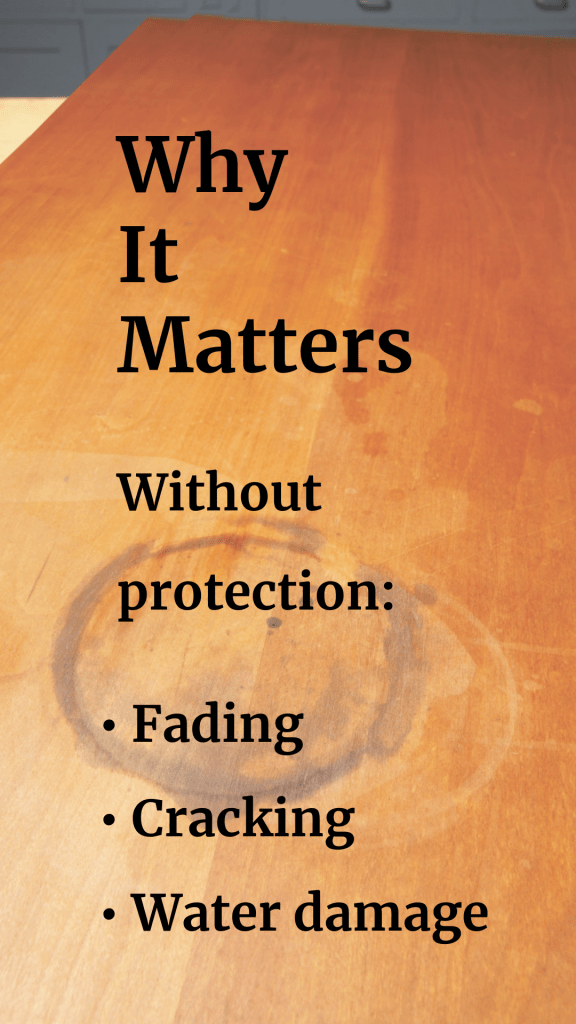
Without a proper finish, wood surfaces are more vulnerable to fading, cracking, staining, and premature deterioration.
Read more about wood finishes here.
The Key Difference Between Stain and Finish
At its simplest:
Stain
- adds color
- penetrates wood
- enhances appearance
- option in some cases
Finish
- adds protection
- seals the surface
- improves durability
- essential for longevity
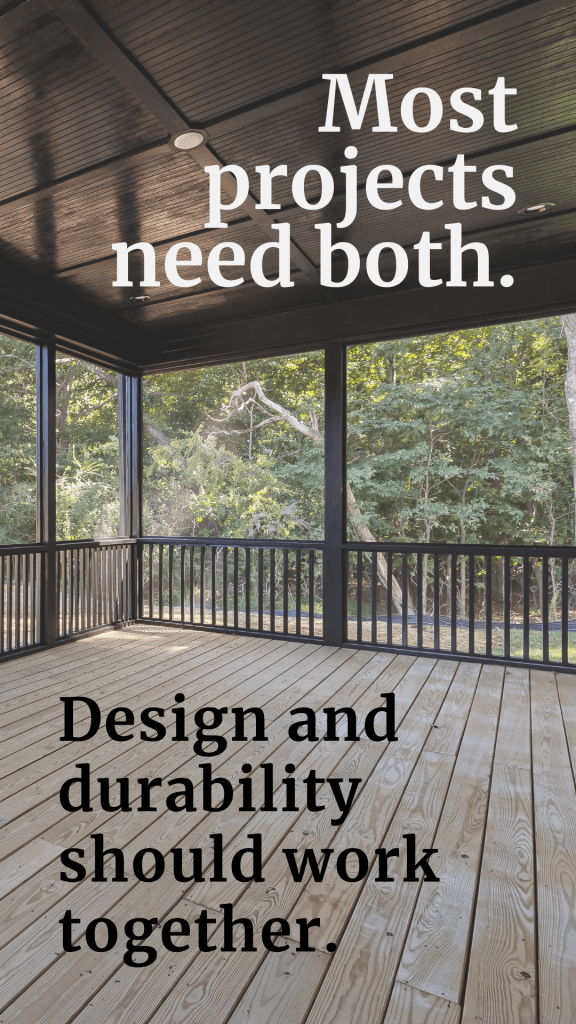
Most quality projects benefit from both stain and finish working together.
The stain enhances the natural beauty of the wood, while the finish protects that appearance for years to come.
Why Using Both Matters
Wood is a natural material that constantly reacts to its environment. Temperature changes, moisture, sunlight, and everyday use all impact how wood performs over time.
Without protection, wood surfaces may:
- Fade in direct sunlight
- Absorb moisture
- Crack or warp
- Develop surface stains
Applying both stain and finish allows homeowners to achieve the desired appearance while also extending the lifespan of the wood.
For example:
- A deck may be stained to achieve a rich color, then sealed to prevent weather damage.
- Interior trim may be stained to match flooring, then finished to protect it from wear.
- Built-ins or cabinetry often require both for durability and visual consistency.
Choosing the Right System for Your Project
Not every wood project requires the same products or application process. The right stain and finish combination depends on several factors, including:
- Wood species
- Indoor vs. outdoor use
- Sun and moisture exposure
- Desired color and sheen
- Expected wear and traffic
Wood finishing should be approached as a system rather than a single product choice. Selecting the right combination ensures the wood performs well over time while maintaining the look homeowners want.
Good craftsmanship isn’t just about how something looks when the project is finished — it’s about how well it continues to perform in the years that follow.
Planning a Wood Project?
If you’re considering updates involving decking, trim work, built-ins, or wood restoration, understanding how stain and finish work together can help you make informed decisions.
Taking the time to choose the right approach ensures that your wood surfaces not only look great — but last.

 S&S Renovations