

When you invest in a piece of woodwork—whether it’s a new deck, a refinished table, custom shelving, or antique restoration—the finish you choose matters just as much as the craftsmanship behind it. Wood finishes protect the surface from moisture, wear, and UV damage while bringing out the natural character of the grain. But with so many options on the shelf, it can feel overwhelming to know which one is right for your project.
This guide breaks down the most common types of wood finishes, how they perform, and where they shine… and where they don’t. By the end, you’ll know exactly what to use and why.
Penetrating Oils
Examples: Tung oil, boiled linseed oil, Danish oil
Penetrating oils soak deep into the wood fibers, enhancing the grain without leaving a thick coating on top. They create a warm, natural look with a matte to low-sheen finish.
Best for: Cutting boards, furniture, butcher blocks, décor pieces, and antique wood
Pros:
- Beautiful “hand-rubbed” appearance
- Easy to refresh or maintain
- Enhances depth and warmth of the grain
Cons: - Not highly water-resistant on their own
- Slow drying
- Needs periodic reapplication
Penetrating oils are ideal when you want wood to look and feel like wood—not plastic or overly glossy.
Polyurethane (Water-Based and Oil-Based)
Polyurethane is one of the most popular protective finishes because it creates a strong, durable barrier that sits on top of the wood.
Water-based polyurethane is clear, low-odor, and dries quickly.
Oil-based polyurethane is more durable but adds an amber tone and takes longer to cure.
Best for: Floors, high-traffic tables, cabinets, trim
Pros:
- Excellent protection from scratches and water
- Multiple sheen options from matte to gloss
- Long-lasting performance
Cons: - Oil-based versions yellow over time
- Can look plasticky if applied too heavily
When you need durability and longevity, polyurethane is often the top choice.
Varnish & Spar Urethane
Varnish and spar urethane are built to stand up to harsh conditions—sunlight, rain, temperature changes, and constant exposure.
Best for: Outdoor furniture, decks, railings, doors, boats
Pros:
- Superior UV and water resistance
- Designed for exterior conditions
- Long-lasting protection
Cons: - Strong odor
- Slower drying and more finicky application
If the project lives outdoors, this category is your friend.
Shellac
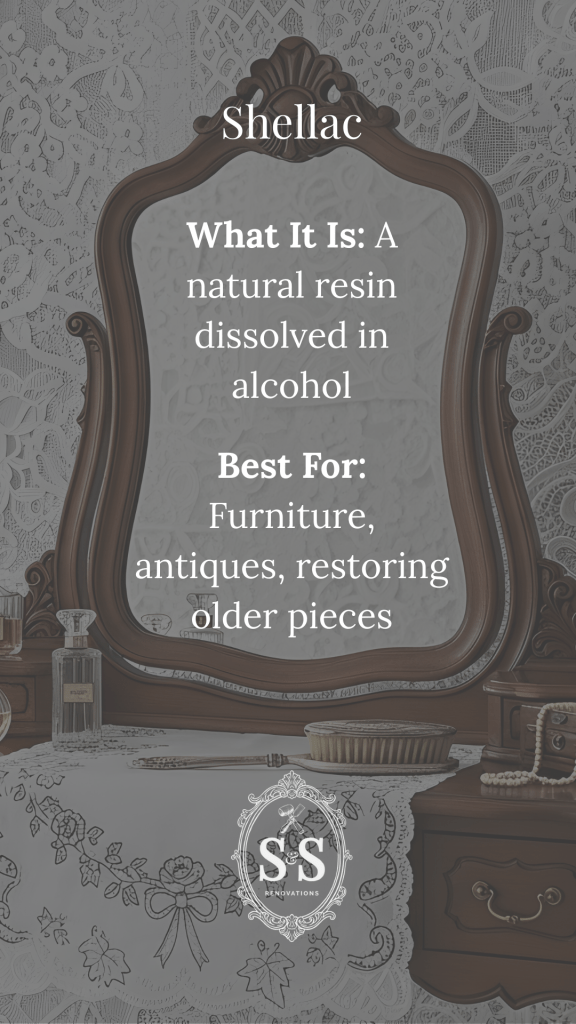
Shellac is a natural resin dissolved in alcohol, commonly used on furniture and antique pieces.
Best for: Restoration work, vintage furniture, decorative pieces
Pros:
- Beautiful warm tone
- Great sealer
- Easy to repair—mistakes or scratches can be blended out
Cons: - Not water-resistant
- Softens with heat and alcohol
Shellac gives a classic, warm look but isn’t the best choice for kitchens, bathrooms, or any surface that sees moisture.
Lacquer
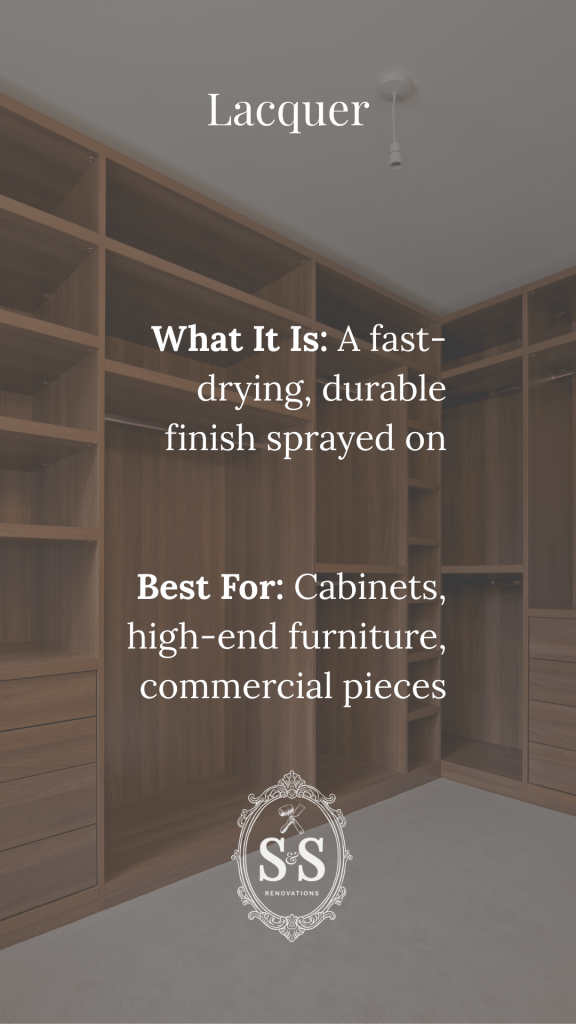
Lacquer provides a smooth, glossy, furniture-grade finish often seen on commercial pieces or high-end cabinetry. It’s usually sprayed for the best results.
Best for: Cabinets, fine furniture, commercial-grade finishes
Pros:
- Fast-drying
- Smooth, glasslike finish
- Very durable
Cons: - Strong fumes—requires proper ventilation
- Best applied with professional equipment
When you’re after that flawless, polished look, lacquer delivers.
Wax Finish
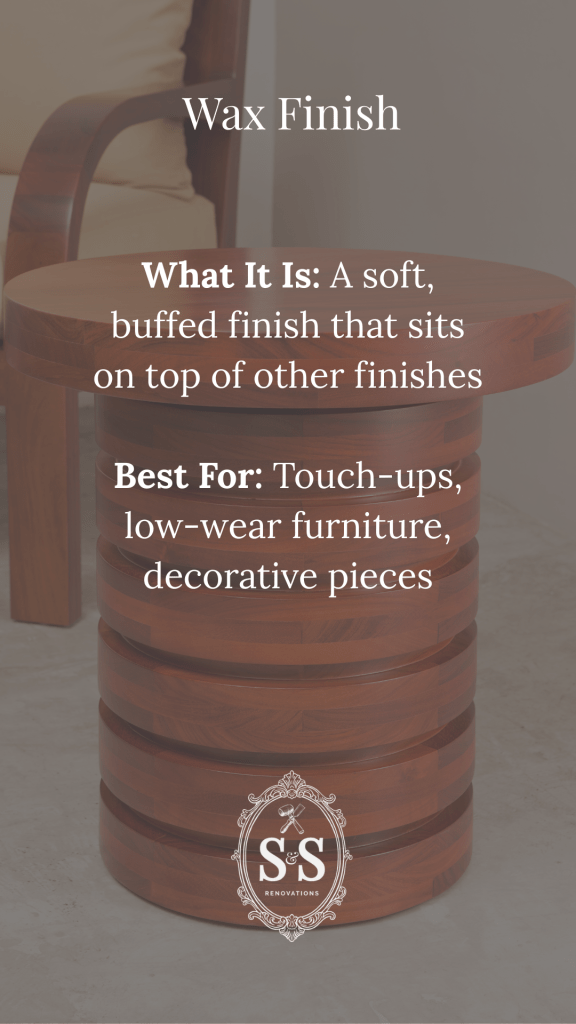
Wax is often used as a final topcoat or for light-duty surfaces. It gives wood a soft, velvety feel and subtle sheen.
Best for: Touch-ups, décor pieces, antiques
Pros:
- Easy to apply
- Enhances the feel of the wood
- Can refresh older finishes
Cons: - Not durable enough for high-use areas
- Needs regular upkeep
Wax can be great—just don’t rely on it as the sole protection for busy surfaces.
Stain vs. Finish: What’s the Difference?
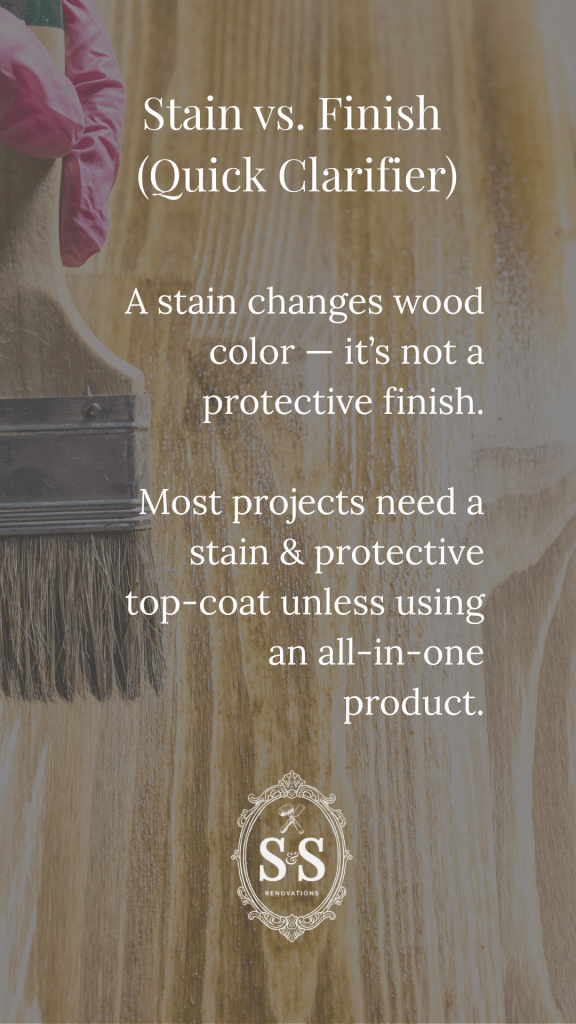
A stain changes the wood’s color.
A finish protects the wood.
They are not the same thing. Most projects benefit from a stain + protective topcoat unless you’re using a specialty all-in-one product.
Choosing the Right Finish
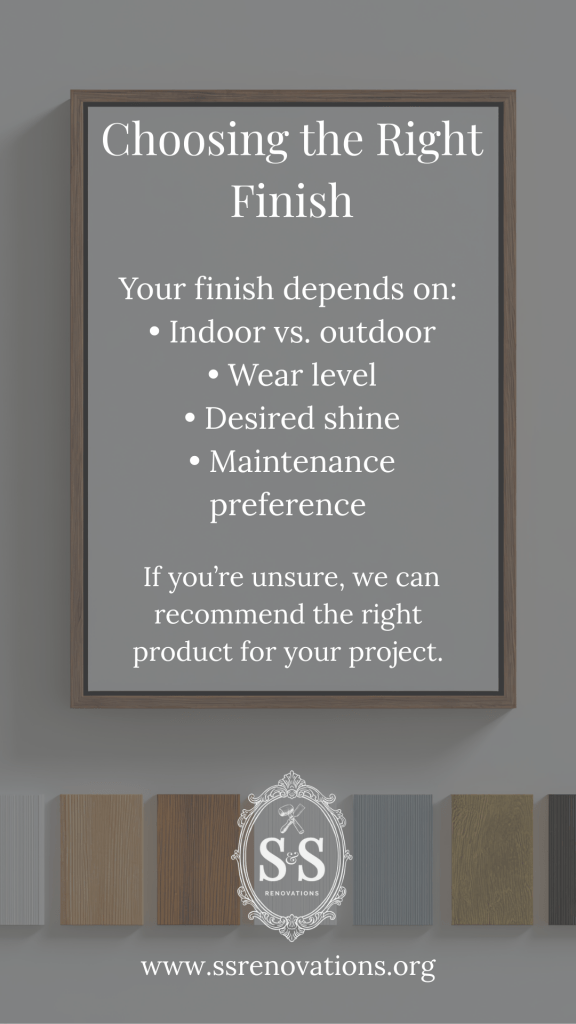
Your final decision depends on a few factors:
- Where the wood will live (indoor vs. outdoor)
- How much wear it will see
- The look you want (natural, matte, satin, gloss)
- Your maintenance preference
- Food safety requirements (for cutting boards or countertops)
If you’re unsure, we’re always happy to point you in the right direction—or handle the finishing work for you.
Final Thoughts
Whether you’re refreshing a family table, restoring historic woodwork, or completing a new build, choosing the right finish makes all the difference. Each type has its strengths and ideal uses, and understanding them helps you get the look and longevity you want from your project.
If you have a project in mind or want help picking the perfect finish, S&S Renovations is here to help with honest guidance and professional craftsmanship.
 S&S Renovations