
Why You Should Never Cover Up Rotten Wood: The Hidden Damage Homeowners Can’t Afford to Ignore
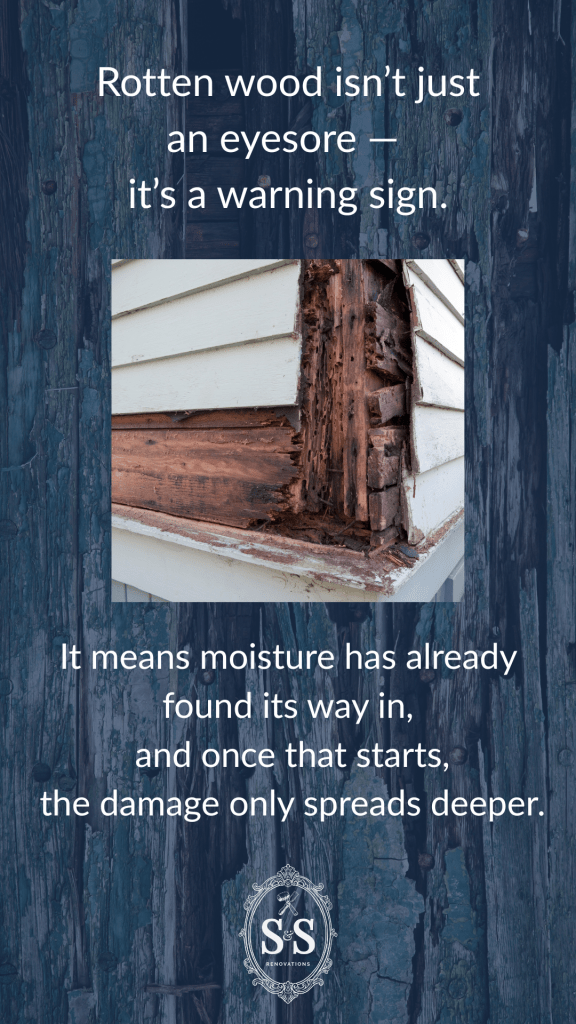
Rotten wood is more than just a cosmetic issue — it’s a warning sign that something deeper is happening inside your home. When wood begins to rot, it means moisture has already breached the surface and started breaking down the structure from within. And once that process begins, it doesn’t stop on its own.
Unfortunately, many quick-fix solutions on social media or DIY forums recommend painting over, covering, or capping rotten wood to “save time.” But the truth is simple:
Covering rot might look better today — but it will always cost you more tomorrow.
At S&S Renovations, we want homeowners to understand why rot should never be hidden, and what proper repair really looks like.
What Causes Wood Rot?
Rot happens when moisture sits inside wood long enough for fungi to start breaking it down.
Common causes include:
- Leaking gutters or downspouts
- Poor window or door flashing
- Deck boards absorbing moisture
- Failing siding or trim
- Ground contact with untreated wood
- Long-term humidity or condensation
Rot often starts small — a soft spot, a bit of discoloration, a flake of wood coming off — but it spreads quickly once the wood fibers stay damp.
Why Covering Wood Rot Is So Dangerous
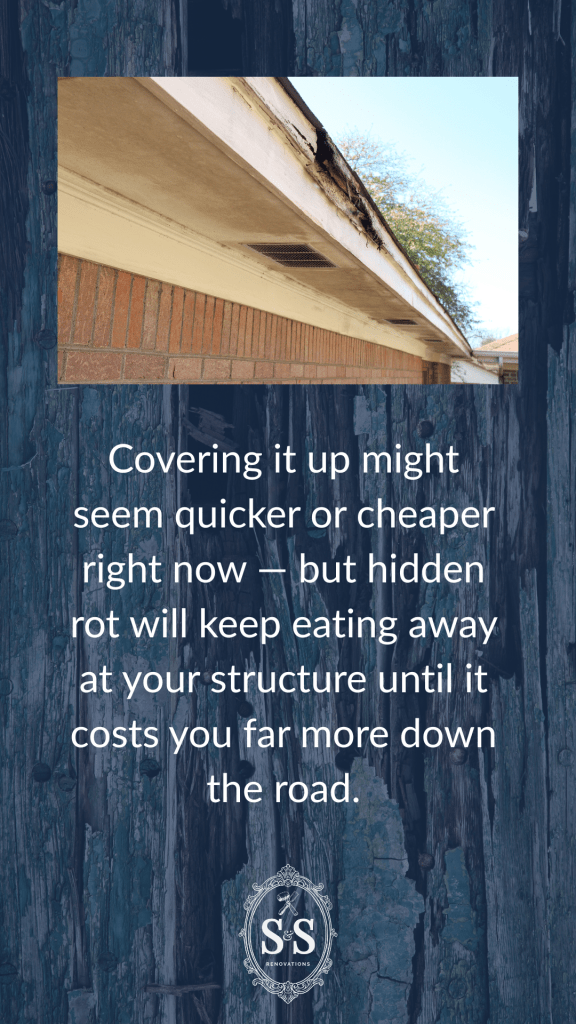
Many homeowners think a little paint or caulk will “stop” rot. In reality, it only seals the moisture in, letting the damage grow behind the scenes.
Here’s what often happens when rot gets covered instead of repaired:
1. The Damage Spreads Deeper
Rot feeds on moisture. Once trapped behind paint or trim, the moisture has nowhere to go — so the decay spreads into framing, sheathing, and surrounding materials.
2. Structural Integrity Weakens
Rotted wood loses strength. As beams, supports, or trim break down, they can no longer carry weight the way they should. What starts as a small cosmetic repair can turn into a major rebuild.
3. Moisture Invites Pests
Termites, ants, and other wood-boring insects love damp, decaying wood. Covering rot creates the perfect environment for them to move in.
4. Repairs Become More Expensive
What could’ve been a small replacement board often becomes:
- Subfloor repairs
- Structural reinforcement
- Wall or siding replacement
- Mold remediation
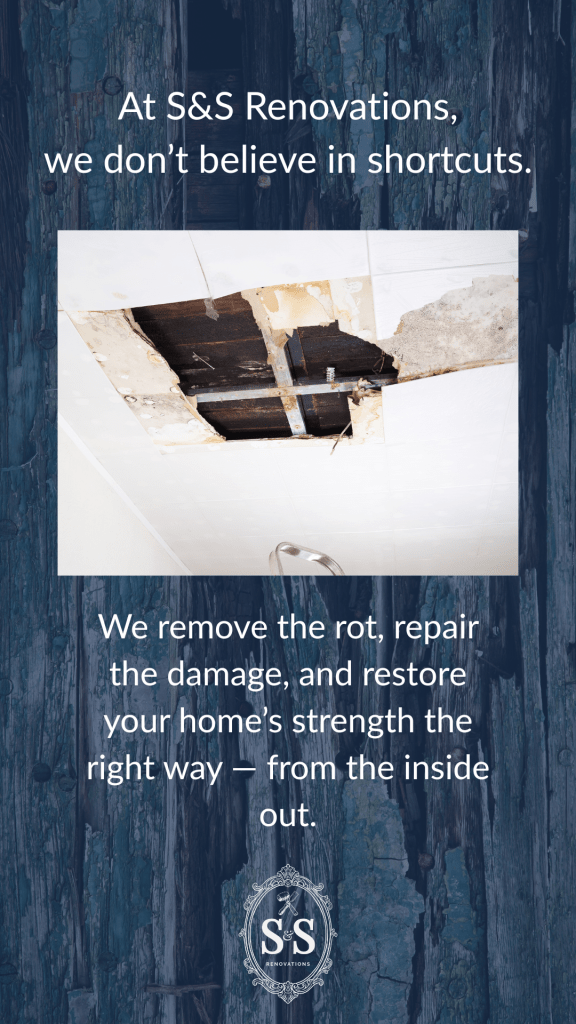
Because the issue was hidden, homeowners don’t catch it until real damage has already set in.
How We Properly Repair Rotten Wood
At S&S Renovations, we never take shortcuts. When we find rotten wood, we follow a thorough, proven approach:
1. Identify the source of moisture
Fixing rot without fixing the cause is just setting up the next problem.
2. Remove all damaged wood
We cut out every area that has been compromised — not just the visible rot.
3. Replace with appropriate, high-quality material
We use proper lumber, pressure-treated wood where needed, and materials designed to resist future moisture.
4. Seal and protect the repair
This includes flashing, waterproofing, priming, and ensuring water can’t get back in.
5. Rebuild the structure correctly
Our goal is always to restore strength, safety, and longevity — not just appearance.
How to Spot Rot Before It Gets Worse
Look for:
- Soft or spongy wood
- Flaking or crumbly edges
- Discoloration or dark spots
- Peeling paint with softness underneath
- A musty smell near wood surfaces
- Wood that easily dents or leaves an indentation
If you suspect rot, don’t wait — moisture problems only grow with time.
The Bottom Line
Rotten wood is a warning — not something to cover up.
Quick fixes hide the problem, but they never stop the damage. Proper repair means removing the rot, fixing the cause, and rebuilding correctly.
 S&S Renovations
Leave a comment