
Water damage doesn’t always start with a dramatic leak or visible flooding. In many homes, the earliest warning signs are subtle and easy to overlook — especially in older houses or homes with crawl spaces, additions, or aging materials.
Knowing what to look for can make a big difference. Early detection often means simpler repairs, less disruption, and better long-term protection for your home.
Below are five common signs of water damage that homeowners should watch for during routine walk-throughs.
1. Stains on Walls or Ceilings
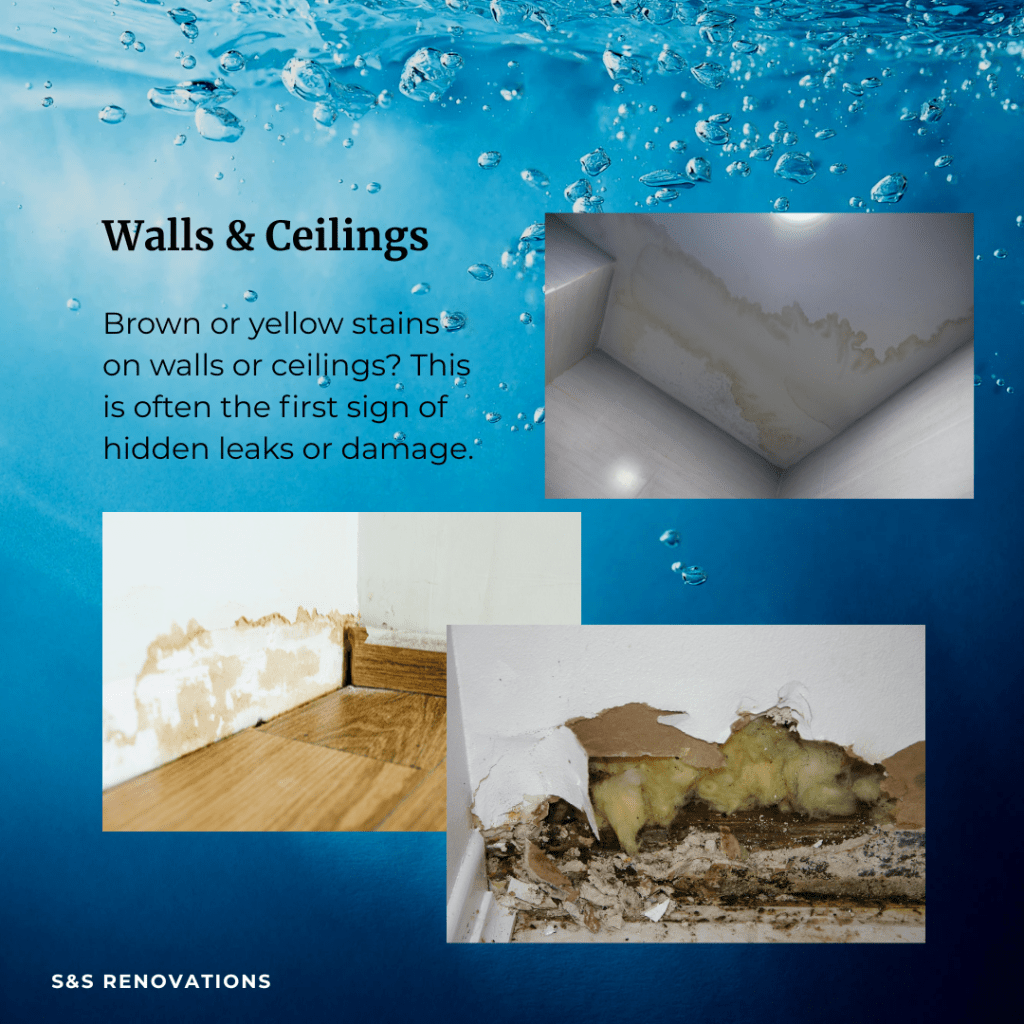
Discoloration is often one of the first visible indicators of a moisture problem. Yellow, brown, or dark spots on walls or ceilings can signal leaks from plumbing, roofing, or condensation buildup.
Even if the stain looks dry, it may point to an ongoing issue behind the surface. Paint can hide moisture temporarily, but stains often return if the underlying cause isn’t addressed.
What to watch for:
- Circular or uneven stains
- Spots that grow or darken over time
- Bubbling or soft drywall around the area
2. Warped or Buckling Floors and Baseboards
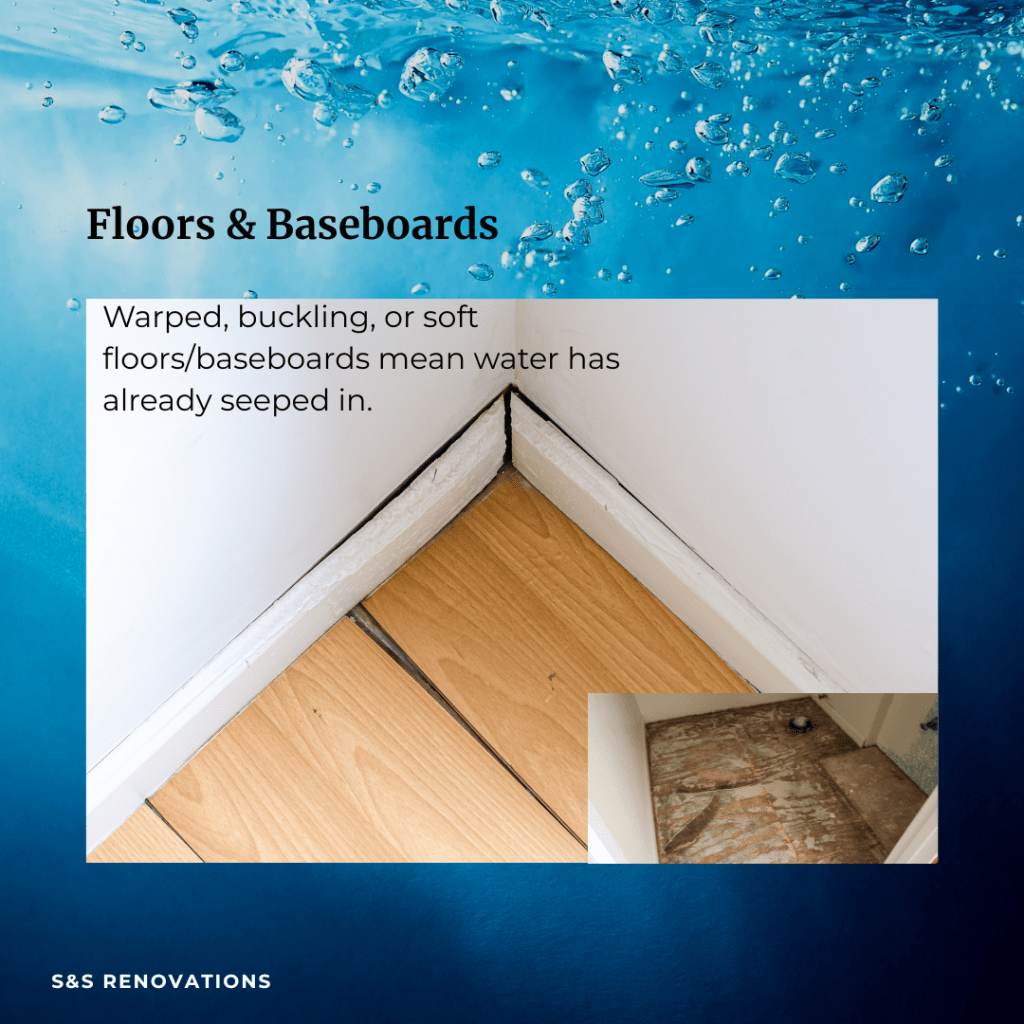
Wood and water don’t mix well. When moisture seeps into flooring or trim, it can cause boards to swell, cup, or separate. Baseboards may pull away from the wall or feel soft to the touch.
These changes are sometimes gradual, making them easy to miss until the damage becomes more severe.
What to watch for:
- Uneven or spongy flooring
- Gaps between floorboards
- Baseboards that appear swollen or distorted
3. Persistent Musty or Damp Smells
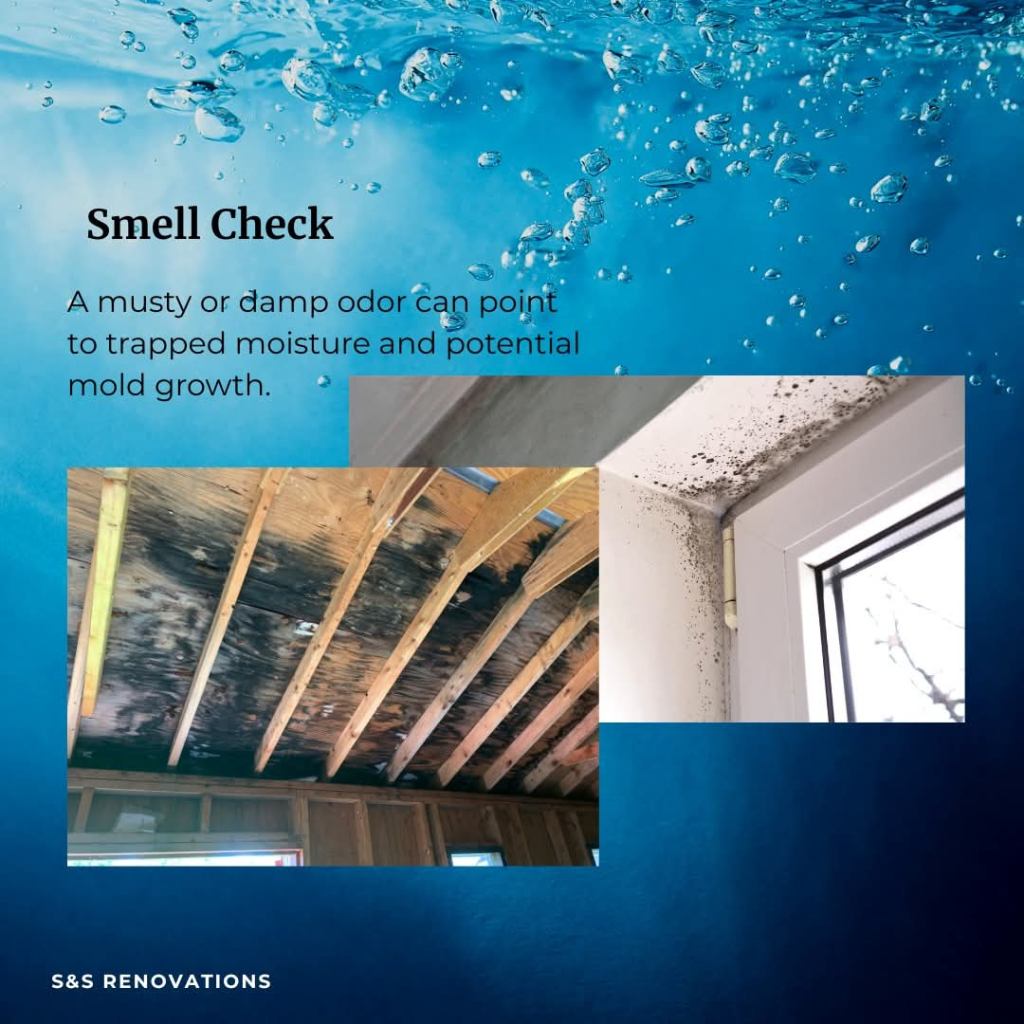
A musty odor is often a sign of trapped moisture — even when you can’t see visible damage. Basements, crawl spaces, bathrooms, and laundry areas are especially prone to this.
Odors can indicate conditions that allow mold or mildew to develop, which can affect both the structure of the home and indoor air quality.
What to watch for:
- Damp, earthy, or “basement” smells
- Odors that return after cleaning
- Stronger smells after rain or humidity changes
4. Peeling Paint or Bubbling Wallpaper
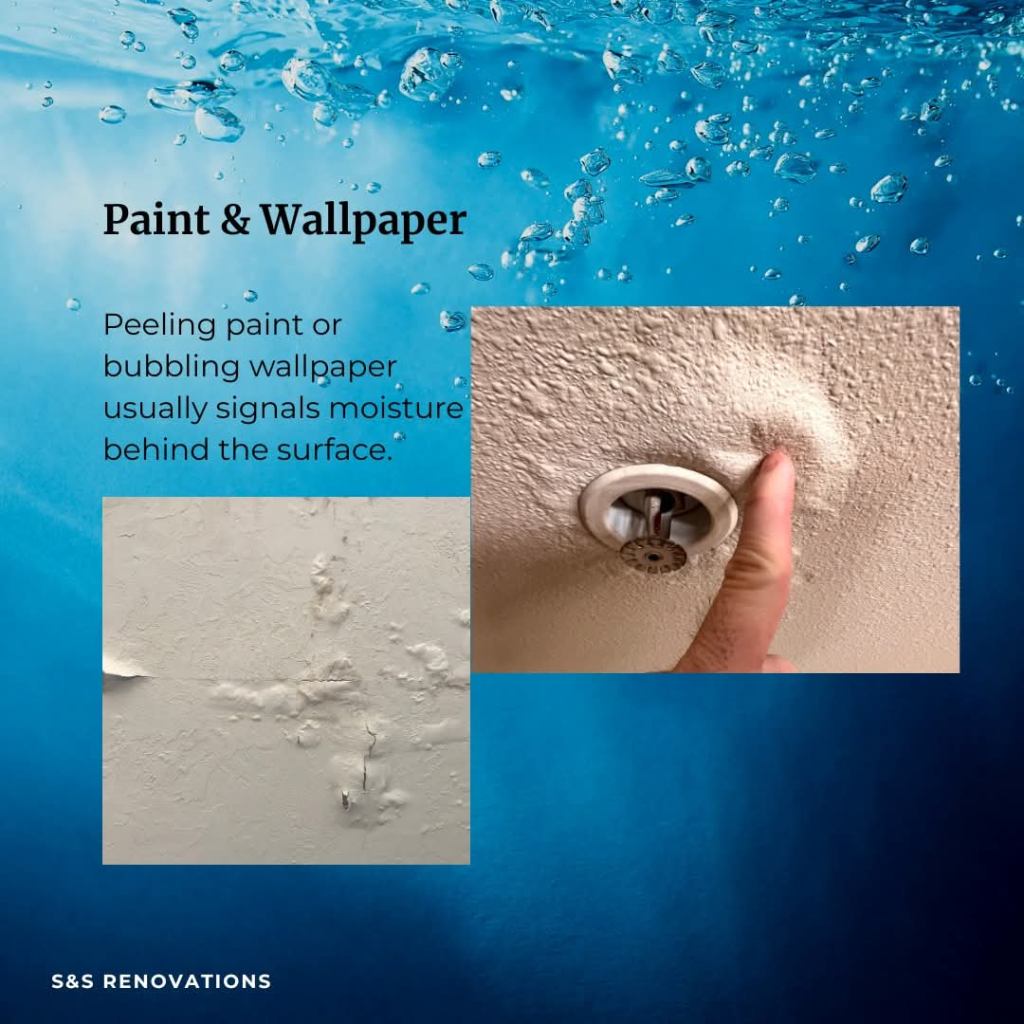
Paint and wallpaper are designed to adhere to dry surfaces. When moisture builds up behind walls, it can cause paint to peel, blister, or bubble, and wallpaper to loosen or warp.
This is often mistaken for a cosmetic issue, but it’s usually a sign of moisture trapped beneath the surface.
What to watch for:
- Cracking or flaking paint
- Bubbles or ripples in wallpaper
- Walls that feel damp or cool
5. Doors or Windows That Stick or Shift
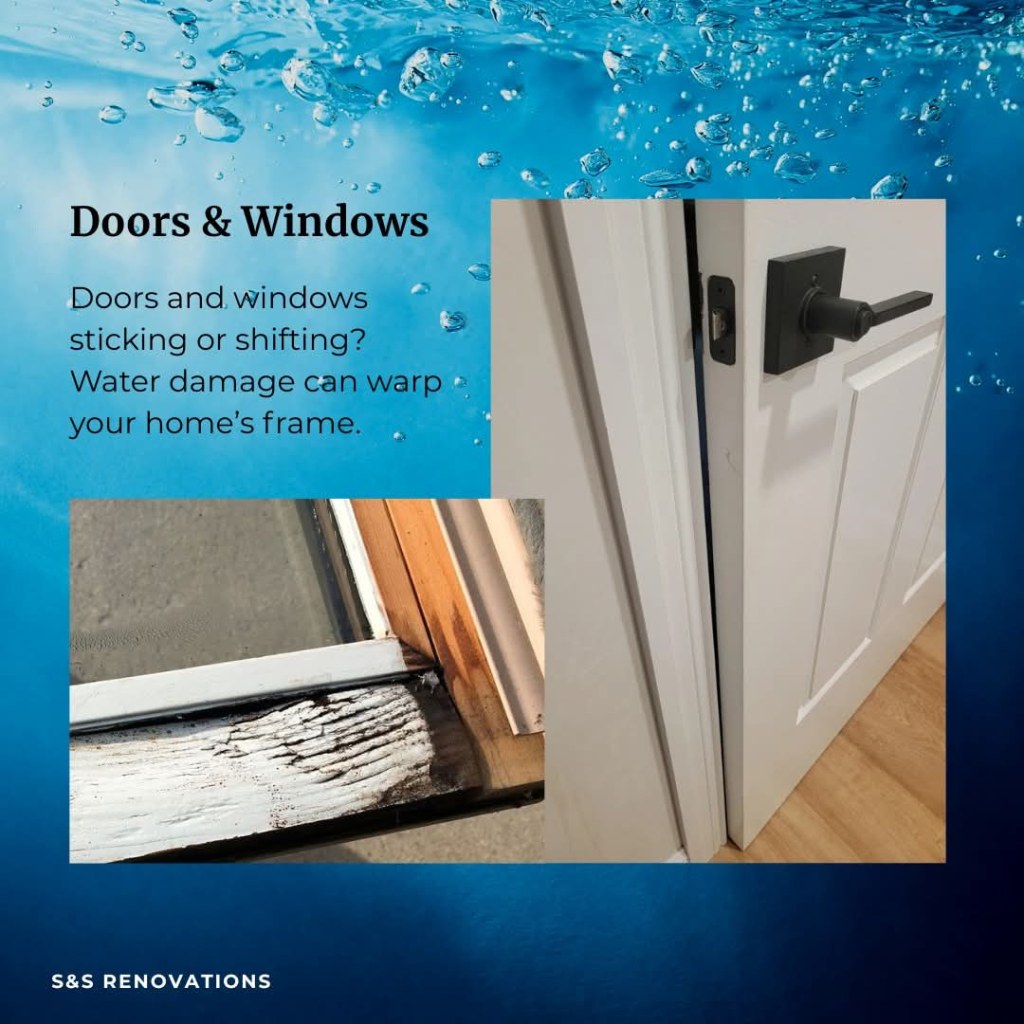
When wood framing absorbs moisture, it can swell and shift slightly. This often shows up as doors or windows that suddenly become difficult to open or close.
Seasonal changes can cause minor movement, but persistent sticking — especially when paired with other signs — may point to moisture-related issues.
What to watch for:
- Doors that rub or won’t latch properly
- Windows that are hard to open or close
- Visible gaps or misalignment around frames
Why Early Detection Matters
Water damage rarely fixes itself. The longer moisture is allowed to remain in walls, floors, or framing, the more extensive the damage can become.
Catching issues early can help:
- Reduce repair costs
- Limit structural damage
- Prevent mold growth
- Preserve original materials, especially in older homes
A simple, periodic home check can go a long way in protecting your investment.
Final Thought- your home doesn’t have to be showing major damage for water to be a concern. Paying attention to small changes — stains, smells, movement, or texture — can help you stay ahead of bigger problems.
If something doesn’t look or feel right, it’s worth taking a closer look sooner rather than later.

 S&S Renovations
Leave a comment